How Long Do Betta Fish Live?
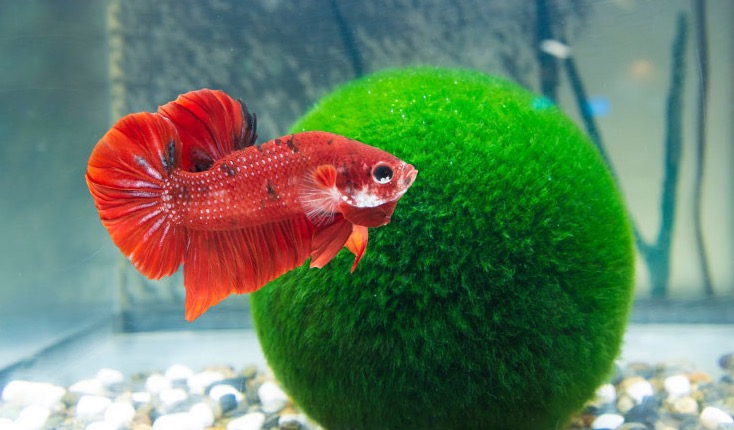
If you’ve recently fallen in love with the vibrant colors and personalities of a Betta fish, one of the first questions you likely asked is the most important: “How long do I have with this wonderful pet?”
It’s a sign of a caring owner to ask about the commitment, and the answer is both straightforward and dependent on you.
The Direct Answer: Betta Fish Lifespan
The average, realistic lifespan for a Betta fish (also known as the Siamese Fighting Fish) kept in a proper home aquarium is:
2 to 4 Years in Captivity
While some lucky owners report their Bettas swimming happily past the 5-year mark, the 2 to 4 year range is what you should expect. However, this range has two massive variables: the fish’s age when you buy it and the quality of the environment you provide.
The Lifespan Reality Check
Before you even bring your Betta home, a significant portion of its life has already passed.
1. Age at Purchase is Key
When you see those beautiful, fully developed male Bettas in the store, they are not babies. They are generally only sold after their signature flowing fins and bright colors have fully matured.
-
Most Bettas are already 6 months to 1 year old when purchased.
This means a Betta that lives for three more years under your care is actually a four-year-old fish! If you are interested in a longer potential lifespan, look for younger females or shorter-finned males (Plakats), as they are often sold at a younger age.
2. Genetics and Inbreeding
Bettas have been heavily bred for decades to achieve their stunning fin types and color variations. Unfortunately, this intense selective breeding can sometimes lead to weaker genetics. Some Bettas are simply more prone to illness or organ failure than others, even with perfect care.

5 Essential Tips to Extend Your Betta’s Life
If you want your Betta to reach the high end of that range (or even beyond!), you must upgrade your setup from the traditional “Betta bowl” to a proper tropical aquarium.
1. 🏡 Tank Size is Non-Negotiable: Minimum 5 Gallons
Click here to make sure your aquarium water is good
This is the single most important factor. Bettas are often sold in cups, leading new owners to believe they can thrive in tiny containers. This is false.
| Condition | Tank Size | Impact on Life |
| Too Small | Under 5 Gallons | Rapid buildup of deadly toxins (ammonia), constant stress, drastically reduced lifespan. |
| Ideal | 5 to 10 Gallons | Stable water chemistry, ample swimming space, and room for necessary equipment. |
A larger body of water is harder to foul up, which keeps stress low and the Betta’s immune system strong.
2. Temperature Stability is Life: Add a Heater
Bettas are tropical fish and require warm, consistent water to maintain their metabolism and fight off disease.
-
Required Temperature Range: $76^\circ \text{F}$ to $82^\circ \text{F}$ ($24.5^\circ \text{C}$ to $28^\circ \text{C}$).
If the temperature drops below this range, your Betta’s immune system slows down, making it highly susceptible to common killers like Ich (White Spot Disease) and Fin Rot.
3. Zero Tolerance for Toxins: Install a Filter
Contrary to popular myth, Bettas need clean water just like any other fish. The waste they produce breaks down into ammonia and then nitrite—which are highly poisonous.
-
The Solution: You need a gentle filter (like a sponge filter or a low-flow hang-on-back model) to harbor beneficial bacteria that neutralize these toxins through the Nitrogen Cycle.
-
Maintenance: Weekly partial water changes (25%) are still necessary to remove built-up nitrates.
4. Feed Less, Not More: Avoid Constipation
The most common mistake new owners make is overfeeding. A Betta’s stomach is only about the size of its eye.
Overfeeding leads to two major issues:
-
Water Fouling: Uneaten food decays, spiking dangerous ammonia levels.
-
Illness: The Betta develops painful swim bladder issues and constipation, which are often fatal.
The Rule: Only feed what your Betta can consume in 2 minutes or less. A staple diet of high-quality pellets supplemented with occasional frozen or freeze-dried protein (bloodworms, brine shrimp) is ideal.
5. Provide Enrichment and Low-Stress Hiding Spots
A bored or stressed Betta is an unhealthy Betta. These fish are intelligent and appreciate a stimulating environment.
-
Plants: Use real or silk plants. Avoid sharp plastic plants, which can easily tear their delicate fins, opening them up to infections like fin rot.
-
Hiding: Add Betta-safe caves, floating logs, or ceramic décor where they can rest and feel secure.
-
Rest: Bettas often like to rest near the surface; a Betta leaf hammock is a perfect addition.
You Control Their Destiny
While genetics set the potential, your care determines the reality. A Betta that is living in a heated, filtered, minimum 5-gallon tank, and is fed a controlled diet, has a high chance of living a long, happy life of 3 to 4 years—or possibly more!
You have the knowledge now to turn that informational search into a successful pet-owning experience.